
New projects, new fears
When the shiny new idea grows teeth.

Hi hello fellow travellers,
I was intending to post an article today that’s been requested by a couple of readers, exploring how I approach imagery in my writing. That article is in fact mostly written, and (le gasp) has got quite long, so it’s coming. But this week I hit a bit of a new project mini crisis and I thought that might be an interesting thing to share, as it’s likely a fairly common phenomenon.
If you are anything like me, you have an ever-evolving list of shiny, delicious creative ideas you cannot wait to sink your teeth into. Projects that are calling out to you, trying to lure you away from whatever editing deadline, ‘real’ work or life commitments you ought to be addressing instead. And oh the joy when you finally can dive into one of these shiny ideas - it’s a moment of (almost) pure creative anticipation and excitement.
I say ‘almost’ because as I’ve spoken about before, I am a strong believer in the tenet that each new creative project should scare you, at least a little. Because that fear, that dauntedness (is that a word?), is proof you are challenging yourself to try something new, to push beyond the comfort of ground you’ve trod before. So there should, for me, be a little bit of ‘oh holy weasels will I really be able to pull this off?’ in amongst the ‘yasss shiny new project time!’
I first jotted down the idea for my current wip (work in progress) maybe 18 months ago? Spent a little bit of time fleshing it out into a workable pitch just over a year ago, and then left it to percolating, grow roots, fractalise and other nonsensical similes ever since. Just over a month ago, I sat down with the wip’s designated notebook and began planning in earnest.
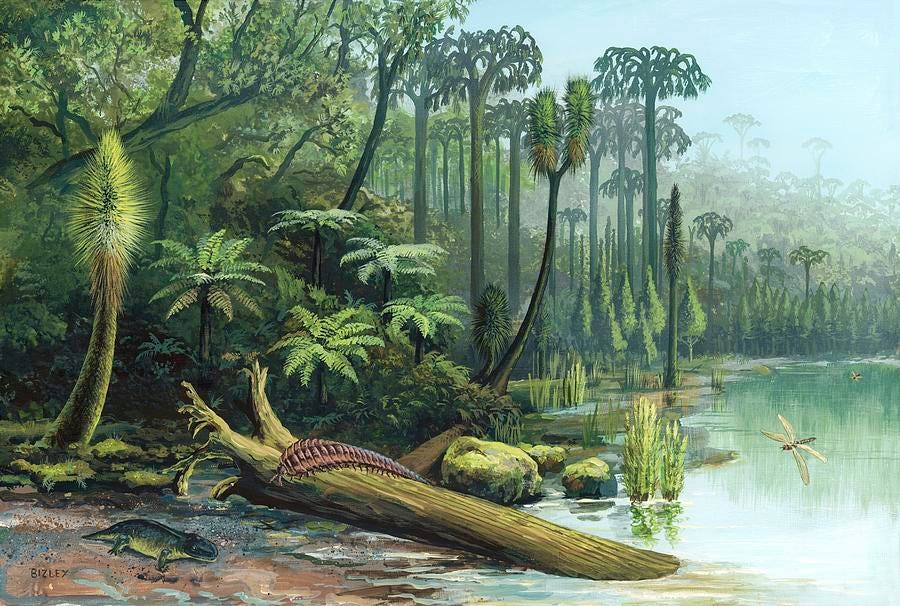
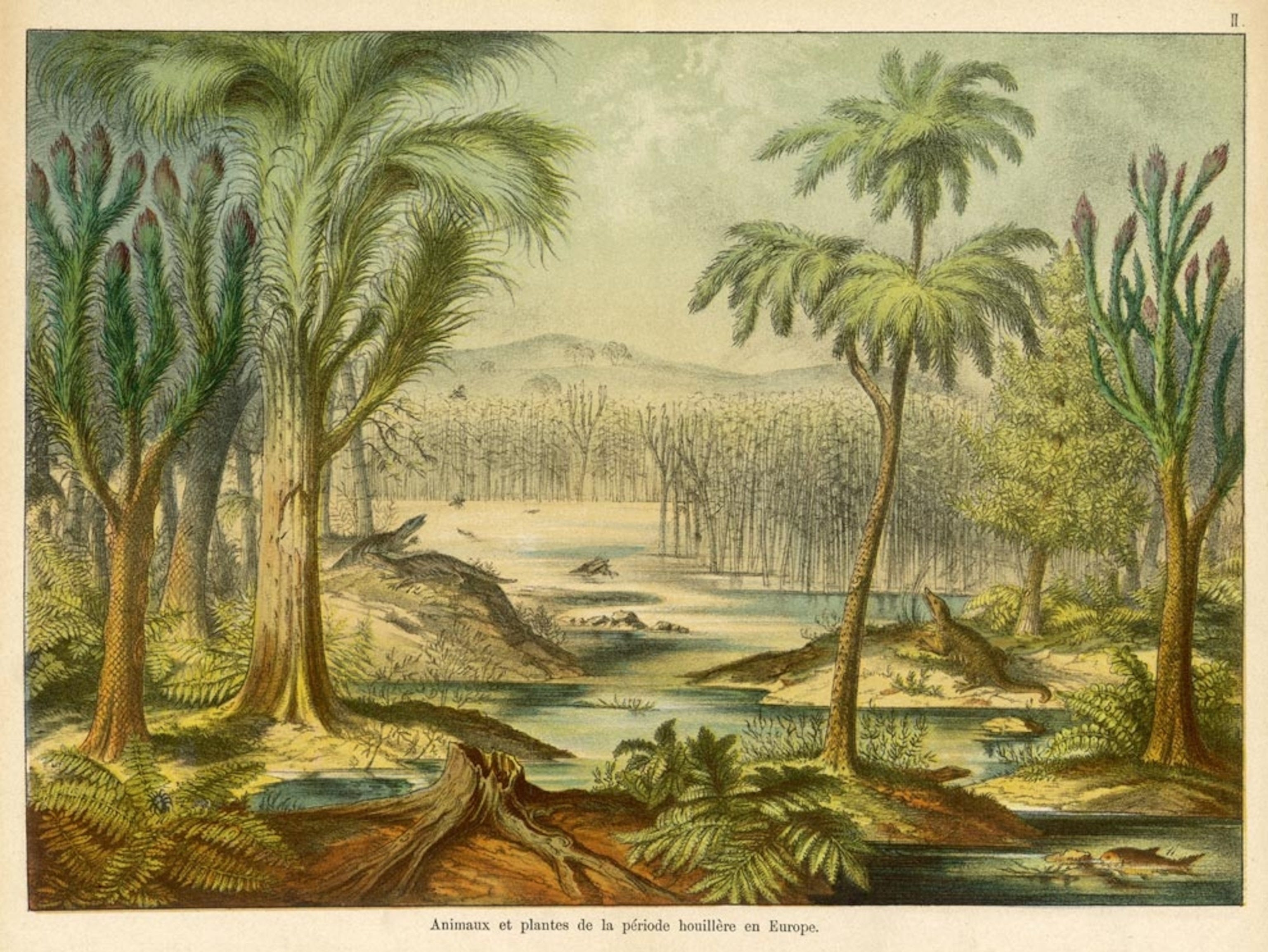
I knew going into it that it’s a structurally challenging idea - it is the story of the disappearance of a group of scientists from a field station on a parallel Carboniferous Era Earth, and is told in two converging timelines that lead towards/regress back to the night of said disappearance. Not only is a braided reverse timeline daft enough, but I decided to tell this book entirely through various ephemera - from news articles, drone footage, radio transmissions, field notes, research reports, emails etc etc.
This is fine, I told myself, so long as I plan the timeline of events fairly well, and set up some template document layouts for the different types of ephemera, it’ll be a little like writing a series of interconnected flash fiction pieces. Which actually sounds kinda fun and very doable, doesn’t it?
I am a fool.
Or at least, I am a partial fool.
Because I was right about that bit - I’ve drawn a whole bunch of flow charts and plot graphs, set up my templates, and I’ve had a lot of fun writing the first handful of scenes/ephemera. At that level, it does feel fun and doable.
There was something I didn’t anticipate at all though: What this structure of storytelling would mean for my prose level craft. I mean, I did think about the prose, obviously. I thought about what a scene told through radio comms or website comments sections might look like. But I didn’t think about the consequences for my personal authorial (why does that always sound pretentious?) voice.
Every writer has aspects of their craft that they are stronger in, and aspects they have to either work harder to develop or somehow avoid. One of my strengths is in my use of language - my descriptive voice, my imagery, subtext and emotional layers. It’s something I work hard on, and tend to have to edit back overwriting, but it’s one of the things readers seem to enjoy most in my books. One of my… maybe not weaknesses, but less powerful areas, is dialogue. My dialogue is fine, but it’s not at the deeply voicey, stage-ready level that some writers work at.
But…
What does a book told through radio comms, work emails and news reports not have any of?
Descriptive imagery and emotional complexity.
What, on the other hand, does it have a lot of?
Dialogue.
Dammit.
Having rattled through the first few scenes in the last couple of weeks, I stalled hard this week and had to spend some time mulling (aka talking to the cats, scowling at the sky and doing exercise) before I figured out what the problem was. I also dug out a few books also told at least partly via ephemera to help get the cogs moving - including Illuminae by Amie Kaufman and Jay Kristoff, Alias Grace by Margaret Atwood, The White Tiger by Aravind Adiga. These books each tackled the balance of narrative flow, voice and the constraints of ephemera differently, which helped me look at my own approach afresh.
See, maybe I could write an entire book without imagery or poetry, but do I want to? It’s a brilliant challenge to make me write exclusively in dialogue, but do I want to do that without any contrasting depth? I don’t want to ‘cheat’ the mystery of the narrative structure by inserting direct character narration because that will dilute its impact, I think. But I like writing the lyrical stuff, it pleases me. And if it’s something readers anticipate in a me-book, what might they think if they don’t get it?
I’m hoping to sell this book alongside the one that’s currently on submission, which is an incredibly imagery-rich, luxuriating-in-language book. If this book is too starkly different in voice, my would-be editor might not want it. Which isn’t the end of the world, I have other books, but it’s a consideration.
Having mulled, scowled and exercised, I hit on the solution(s):
One of the drones that records footage for and of the scientists has developed a neural network tic/personality after a being damaged by giant dragonflies. Its voice is a little bit odd, a mix of factual auto-generated descriptions, and semi-sentience. I started re-writing a scene in this voice today and it’s already a lot of fun, opening up linguistic doors for me to add more depth and character to these scenes.
I am going to allow my central character email contact with her sister - with whom she is more emotional and open than she can afford to be elsewhere. I need to think about how I will portray censorship & oversight of these emails, but that’s future-me’s challenge.
And I am going to have a series of short radio transmissions of unknown origin that narrate a very different perspective, bringing in both a ‘voice of the land’ type narrator, and a whole lot of potential for increasing the sense of threat (hopefully).
I think the combination of these will give me space to lean into my strengths and root the story in my own voice a little more solidly. While also pushing me into new territory in terms of using other more fragmentary, formal, and script-like prose structures. Having this range will also hopefully make the whole narrative more enticing and intriguing for readers, we shall see…
Hitting this minor wall this week has been a healthy reminder that I need to be thinking about the voice of the story as a whole, not just the mechanics of it. I need to think about my strengths and my voice, not just the thrill/fear of trying something new. Yes, this book a structurally challenging thing and that needs attention, but not at the expense of the vibes, and I personally need some unfettered beauty in the mix otherwise the end result won’t be fully me.
Wish me luck as I dive back into the shiny new project, and the half-mind of a damaged camera drone…
Thank you for reading. Next time I should be bringing you that article on descriptive writing, but until then, wishing you a weekend of plentiful books and tea.
You've healthy helping of scientific, which the rest of my family are also blessed with. Me, not single dollop. 🙁
Both fascinating and reassuring to read of your writing dilemmas; I don't share them exactly but would do well to attempt to adopt your analytical approach, as well as recognise - and then draw up the courage and a strategy to deal with - the bits I'm scared of. Best of luck with yours ) (and you are correct in thinking your prose is very much appreciated by your readers.